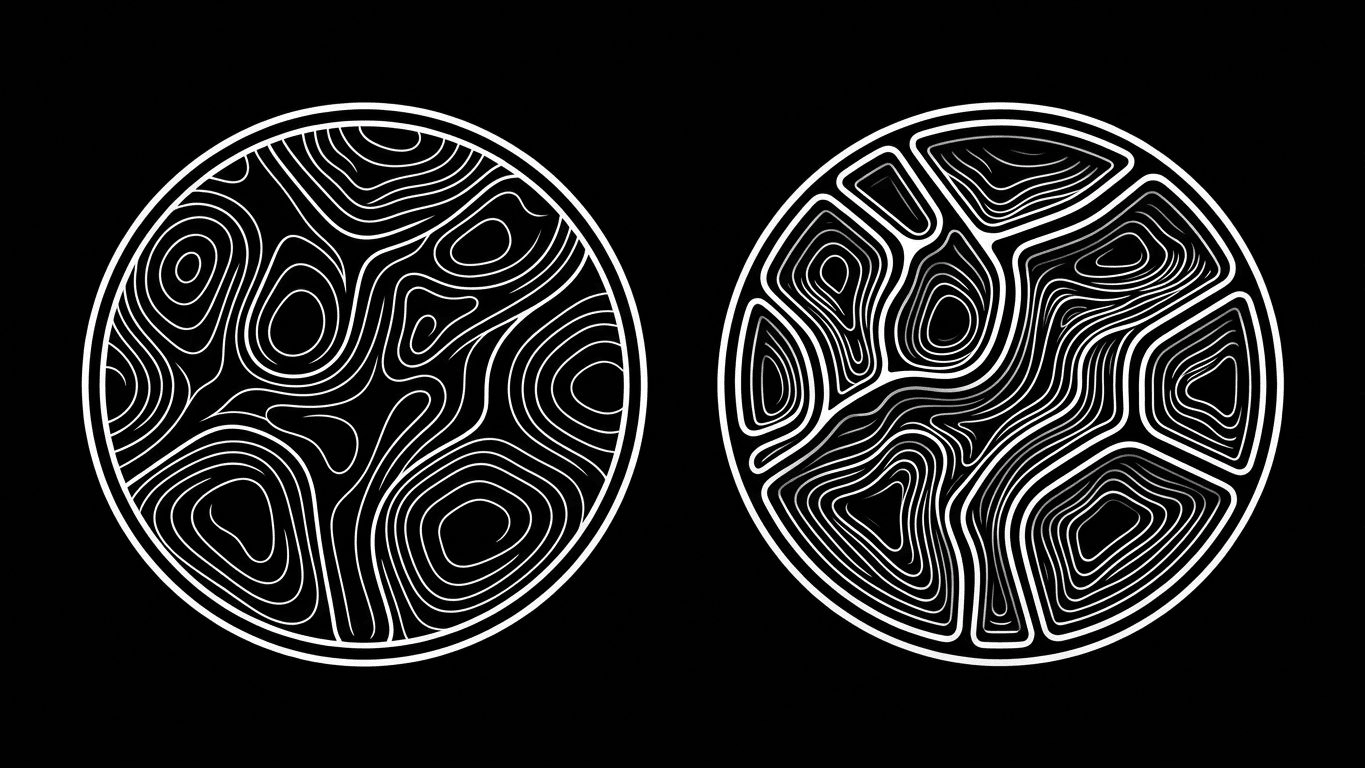
Hard enamel pins vs soft enamel pins for branded merchandise
Hard Enamel Pins vs Soft Enamel Pins for Branded Merchandise
When organisations invest in branded merchandise, the details matter. A pin that looks polished and professional on a lanyard, jacket lapel, or event bag communicates something specific about the brand behind it. Choosing between hard enamel pins and soft enamel pins is one of the first decisions buyers face, and it is not always straightforward. This guide examines the key differences between the two formats to help businesses, event teams, and procurement managers make an informed choice.
What Are Enamel Pins?
Enamel pins are small metal badges produced by filling recessed areas of a die-struck metal base with coloured enamel. The metal outline (known as the die line or metal border) separates the colour fields and gives each pin its defined, graphic quality. Both hard and soft enamel pins begin with the same die-striking process. The difference lies in what happens after the enamel is applied.
According to factorypin.com, the enamel pin market continues to grow, with consistent demand from brands, creators, communities, and collectors. This sustained interest reflects how effectively pins function as wearable brand identifiers.
The Core Difference: Finish and Construction
According to chinacoinsandpins.com, hard enamel pins have a smooth finish. They are polished to create a sleek and luxurious look, while soft enamel pins retain a textured, recessed surface where the enamel sits slightly below the metal lines.
In practical terms:
Hard enamel is baked at a higher temperature, then polished flat so the enamel surface sits level with the metal lines. The result is a smooth, coin-like face with no texture variation between the metal and colour fields.
Soft enamel is filled and baked at a lower temperature. The enamel does not reach the height of the metal lines, which leaves the raised metal border visible and creates a tactile, dimensional surface.
Both finishes are then plated in gold, silver, black nickel, or other metal tones depending on the design brief.
HARD ENAMEL (Flat)      SOFT ENAMEL (Recessed)
┌───┬───┬───┬───┐       ┌─┐ ┌─┐ ┌─┐ ┌─┐
└───┴───┴───┴───┘       └─┴─┴─┴─┴─┴─┴─┘
  ^   ^   ^   ^           ^   ^   ^   ^
Enamel flush with       Enamel sits below
metal ridges.           metal ridges.
Visual comparison of hard vs. soft enamel application depth.
Appearance and Brand Impression
Hard enamel pins are generally associated with a more formal, polished aesthetic. The flat, glassy surface reads as refined and considered, which makes this format well suited to corporate branding, employee recognition programmes, and event merchandise where a professional impression is important.
Soft enamel pins offer more visual dimension. The raised metal lines catch light differently across the pin face, which gives the finished piece a more graphic, illustrative quality. This format tends to suit community merchandise, creative organisations, and designs with strong outlines and bold colour blocks.
Neither format is inherently superior. The right choice depends on the design, the audience, and the context in which the pin will be worn or distributed.
Design Considerations
The two formats handle artwork differently, and this affects how a design should be prepared.
According to createpins.com, minimum line thicknesses are 0.15 mm for soft enamel and 0.2 mm for hard enamel. Hard enamel requires slightly thicker metal lines because the polishing process can wear down finer details. Designs with very thin lines or highly intricate detail may be better suited to soft enamel.
The same source notes that soft enamel's recessed areas are typically 0.2 to 0.3 mm deep. This depth is what creates the tactile quality that distinguishes soft enamel from its harder counterpart.
For branded merchandise, this means:
- Logos with clean, bold outlines generally work well in either format.
- Designs with fine text, thin separating lines, or gradient-adjacent colour transitions may perform better in soft enamel.
- Designs intended to convey a polished, corporate finish are often better served by hard enamel.
Durability and Longevity
Hard enamel pins are more resistant to surface wear. Because the enamel is polished flat and the surface is sealed, the colour fields are less exposed to everyday abrasion. This makes hard enamel the preferred choice for items intended for long-term use, such as membership pins, award pins, or branded merchandise that recipients are expected to keep and wear repeatedly.
Soft enamel pins are durable in normal use but the recessed enamel can be more susceptible to chipping or fading over time if subjected to heavy wear. For event giveaways or limited-run merchandise where longevity is less critical, this distinction is unlikely to affect the purchasing decision significantly.
Cost and Production Time
According to createpins.com, soft enamel pins are typically 15 to 30 percent less expensive than hard enamel pins. One supplier's pricing for 100 one-inch pins places soft enamel at approximately USD 180 to 240 versus USD 220 to 280 for hard enamel. For larger branded merchandise orders, this difference can represent a meaningful budget consideration.
Production timelines also differ. The same source notes that one manufacturer gives soft enamel pins a typical production time of 12 to 15 working days, while hard enamel adds approximately 5 to 7 business days compared with soft enamel due to the additional polishing stage.
For organisations working to a fixed event date, this timeline difference is worth factoring into the order schedule.
The Business Case for Enamel Pins as Branded Merchandise
The broader case for investing in physical branded merchandise is well supported. According to custom.sockclub.com, promotional products drive 90 percent brand recall. Wearable items such as pins extend that visibility beyond the initial point of distribution, as recipients continue to wear them in public settings.
According to hey-gift.com, the enamel pin market continues to evolve, with brands increasingly using pins as collectible series, loyalty rewards, and event-specific items rather than purely functional badges. This shift reflects how pins have moved from simple identification items to deliberate brand touchpoints.
Which Format Is Right for Your Order?
| Consideration | Hard Enamel | Soft Enamel |
|---|---|---|
| Finish | Smooth, polished, flat | Textured, dimensional |
| Best for | Corporate, formal, polished | Creative, community, illustrative |
| Design detail | Slightly less fine detail | Handles finer lines better |
| Durability | Higher surface resistance | Good for standard use |
| Cost | Higher per unit | Lower per unit |
| Production time | Longer | Shorter |
If the priority is a refined, long-lasting pin for a professional context, hard enamel is the stronger choice. If the priority is a visually dynamic pin for event merchandise, community branding, or a more illustrative design, soft enamel delivers excellent results at a lower cost and faster turnaround.
┌────────────┬───────────────┬───────────────┐
│ FEATURE    │ HARD ENAMEL   │ SOFT ENAMEL   │
├────────────┼───────────────┼───────────────┤
│ Surface    │ Smooth        │ Textured      │
│ Detail     │ Medium        │ High          │
│ Cost       │ +15-30%       │ Standard      │
│ Timeline   │ Longer        │ Shorter       │
│ Durability │ Maximum       │ Standard      │
└────────────┴───────────────┴───────────────┘
Decision matrix for choosing between hard and soft enamel based on business needs.
Frequently Asked Questions
What is the main visual difference between hard and soft enamel pins? Hard enamel pins have a flat, polished surface where the enamel sits level with the metal lines. Soft enamel pins have a textured surface with the enamel sitting in recessed areas below the raised metal border.
Which type of enamel pin is more durable for branded merchandise? Hard enamel pins offer greater surface durability because the polished finish seals the enamel. They are the preferred choice for pins intended to be worn regularly over a long period.
Are soft enamel pins significantly cheaper than hard enamel? Soft enamel pins are typically 15 to 30 percent less expensive per unit. For large-volume branded merchandise orders, this can represent a notable cost saving.
Can Patch&Bagel produce both hard and soft enamel pins? Yes. Patch&Bagel produces custom enamel pins in both hard and soft enamel finishes, with a minimum order quantity of 50 pieces per design and no mould, die, or setup fees. Every order includes a free digital proof before production begins.
How far in advance should I order enamel pins for a corporate event? As a general guideline, confirming artwork six to eight weeks before the event date allows sufficient time for the proofing and production process, particularly for hard enamel pins, which require additional polishing time.
Which format works better for a logo with fine text? Soft enamel handles finer line detail more reliably. Hard enamel requires slightly thicker metal lines due to the polishing stage, so very fine text or intricate detail is generally better suited to soft enamel.
Ordering Custom Enamel Pins
For organisations ready to move forward with a branded pin order, Custom Enamel Pins from Patch&Bagel are available in both hard and soft enamel finishes, starting from 50 pieces per design. Pricing begins at SGD 4 per pin at 50 pieces and reduces to SGD 1.20 per pin at 1,000 pieces, with no setup fees and free worldwide shipping included. A free digital proof is provided before any production begins, so the design can be reviewed and approved with confidence.
Explore more from Patch&Bagel at Patch&Bagel